
From seed to sapling: Behind the scenes of our Community Tree Nursery
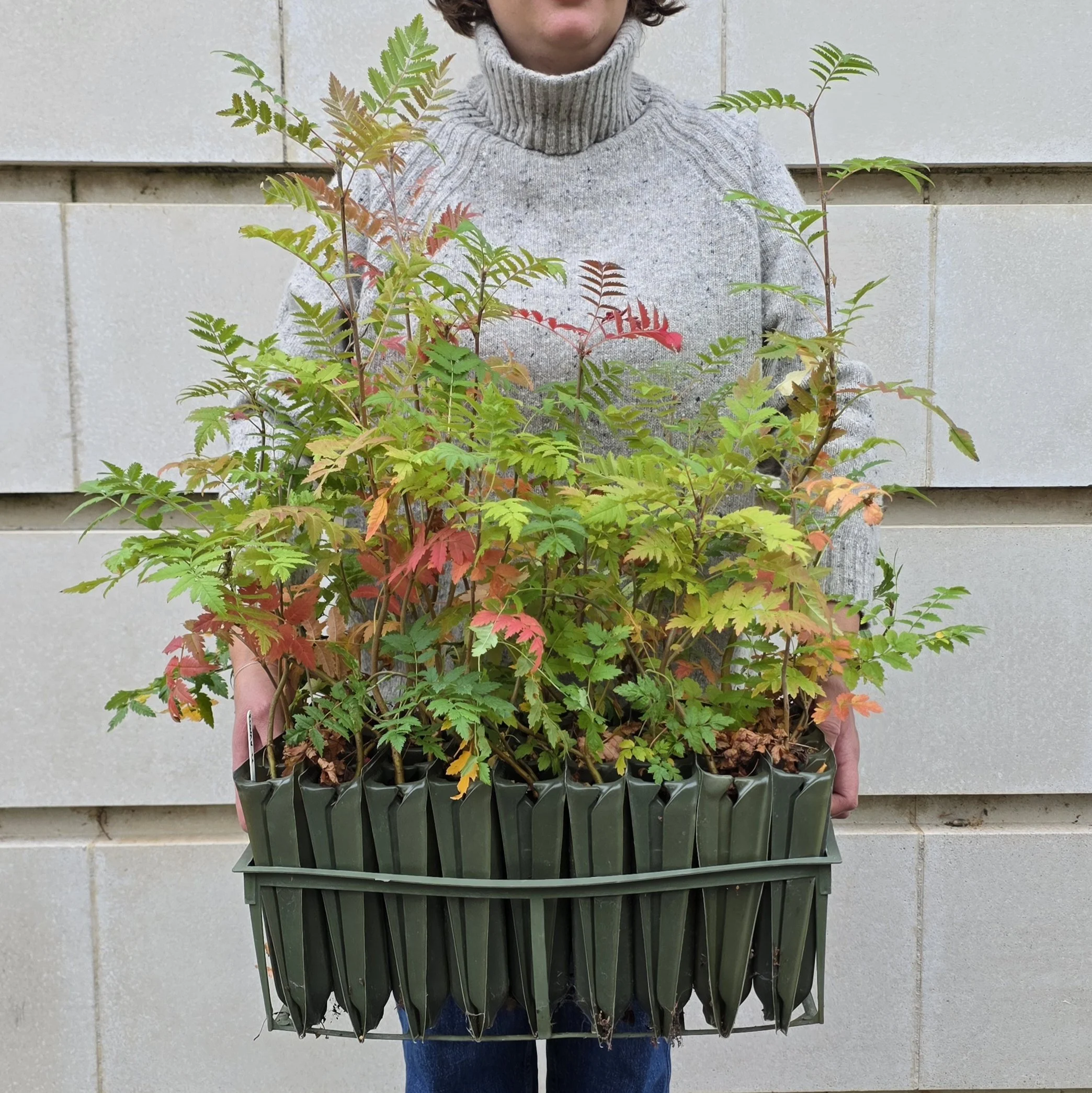
Our Community Tree Nursery currently has hundreds of native tree saplings for residents to plant out and grow for just £1 (order yours here!).
Every tree we grow represents a community effort: someone gathering a seed, a volunteer carefully preparing it, months of watering and nurturing, and someone ready to plant it and help it grow.
Here's a look behind the scenes at how our Community Tree Nursery actually works!
Launched with a wave of support
The Community Tree Nursery was established at the very beginning of 2025, thanks to a successful Crowdfunder campaign and the backing of our community. We decided to grow trees for residents as they have such a lasting and important impact - boosting biodiversity, providing fruit and nuts, giving shade in heatwaves, reducing flood risk, capturing carbon and making Chippenham a more attractive place to live.
With nature in decline and the impact of climate change being so acutely felt, the need was definitely there. Our initial target to grow 500 trees a year was quickly increased following such a flood of support from residents via our Crowdfunder, so we upped our capacity to 1,000 trees a year.
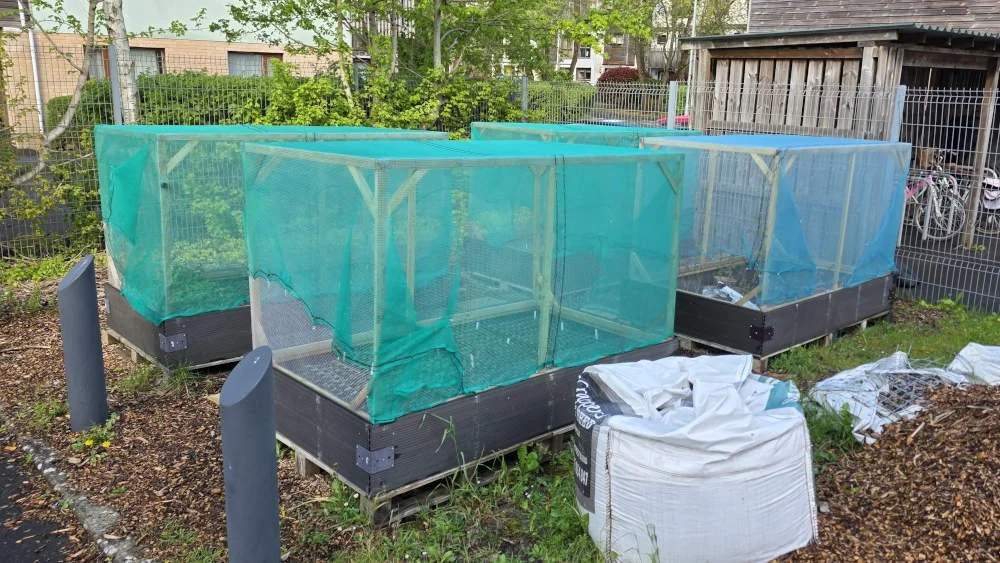
We set up our nursery infrastructure at our Community Garden in early 2025 at the Wiltshire and Swindon History Centre, and the rest is history! Importantly, the nursery isn't a commercial operation: it's a community-led project designed to get more trees growing across the local area.
Foraging for nuts and seeds
Every tree begins with a nut or seed gathered in late summer or autumn by our volunteers. We find suitable local locations with healthy trees that we want to grow and visit these on a foraging trip together.
This year in August we gathered Cherry Plums and Elder berries and the following month in late September we gathered Rowan, Hawthorn, Spindle, Hazel, Silver Birch, Crab Apple and Guelder Rose.
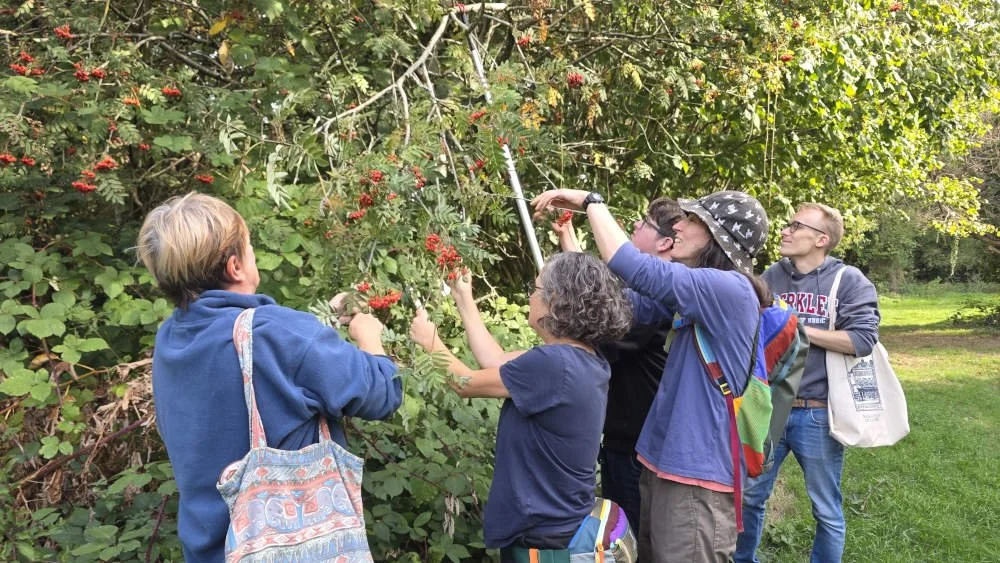
Foraging for Rowan berries in September 2026
Gathering local nuts and seeds is really important and this is a key benefit of Community Tree Nurseries. Locally sourced material will be more resilient and suited to local climate and growing conditions, and more resistant to local diseases and pests. We can trace each tree we grow back to exactly where the nuts or seeds were gathered. Our volunteers only gather material from healthy trees and we’re careful to only take what we need, leaving plenty for local wildlife to enjoy too.
Occasionally we need to buy seed from an approved UK source when there are none available locally, for example Wild Pear and particularly Hazel if the squirrels have beaten us to the nuts!
Processing our harvest
A successful foraging trip results in a backpack bursting with nuts, berries and fruit, and now the hard work really begins.
Our volunteers now need to process the seeds - this means extracting them from the berries or fruit, cleaning and drying them. It can be more difficult than it sounds, especially when dealing with bulk amounts!
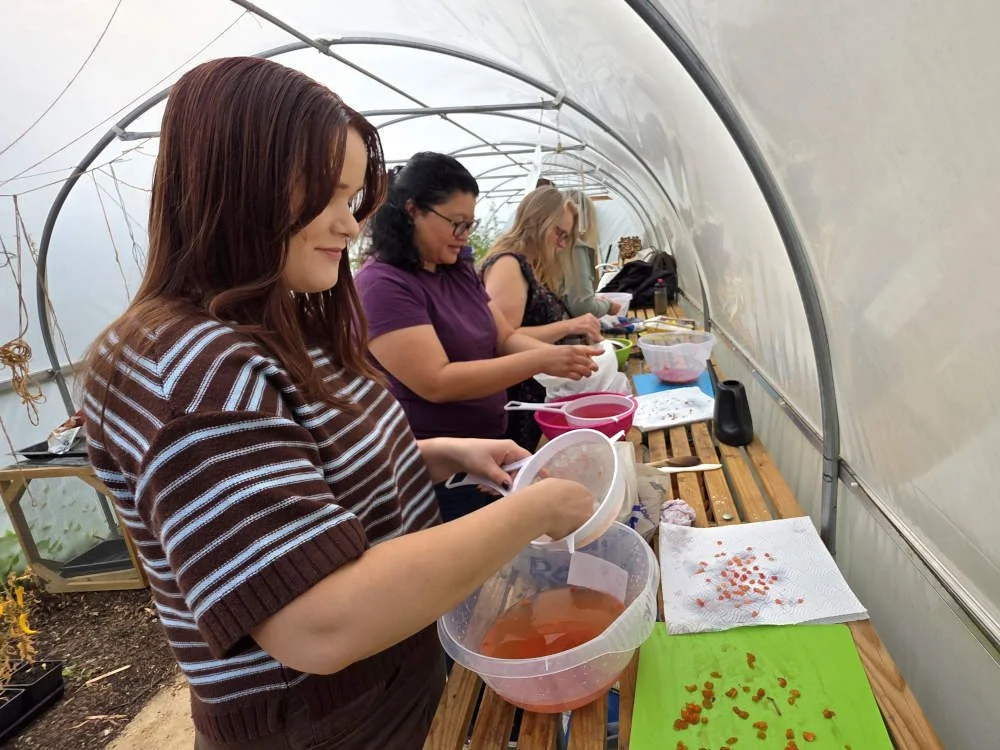
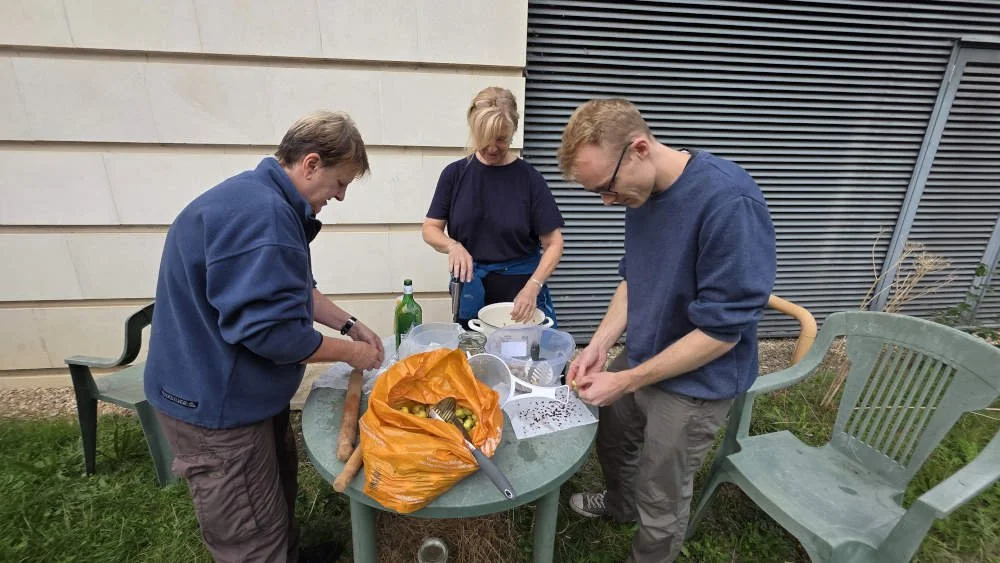
Rowan and Elder berries need to be mashed up and washed in a sieve to remove the flesh of the berries. The seeds are tiny and much work goes into separating them from the berry skin in bowls of water. Thankfully it’s only a once-a-year task!
Other berries and fruit are much easier as they have larger seeds, with Hawthorn, Spindle and Guelder Rose berries being particularly easy to extract by hand.
Processing the seed is a brilliant communal task - it can be time consuming and having a good chat together definitely makes the job go quicker. Having said that, it’s a great mindfulness activity and knowing you’re handling the future trees of Chippenham is quite exciting.
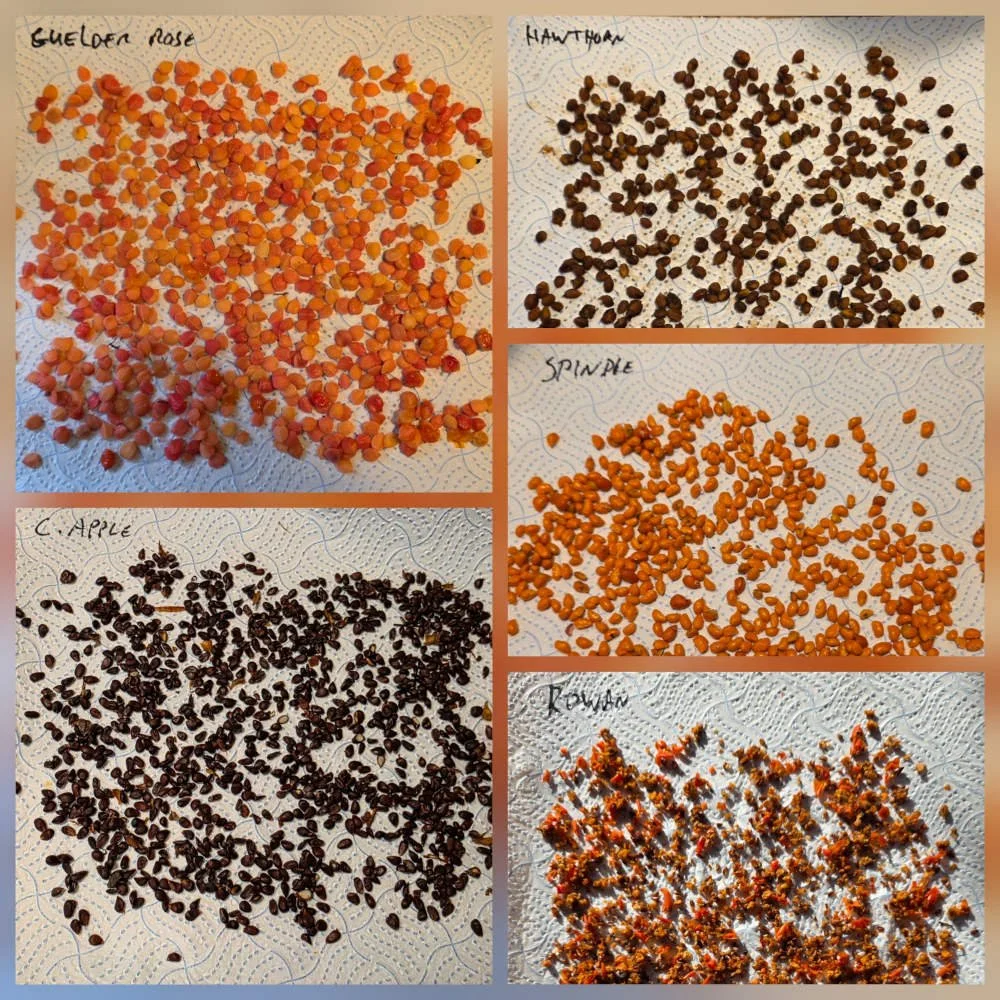
We try not to waste the fruit either, with crab apples used to make jelly or gin, once the seeds are removed.
The great stratification - breaking winter dormancy!
Once we’ve processed our seeds there is another important step that is critical for growing trees. Most tree seeds have a degree of dormancy built in. This means that if we planted them straight away they won’t germinate - they need to experience a specific period of warm and cold temperature to ‘break dormancy’ and grow. This process is called stratification. It’s a really ingenious way of ensuring the seeds germinate in spring, and not in a mild autumn or winter when a following cold spell of weather would kill them.
Isn’t nature clever?!
It is possible to sow the nuts and seeds outside in autumn and rely on natural winter conditions as they would in the wild, but with unpredictable weather and milder winters due to climate change, many tree nurseries use a fridge to mimic nature and precisely control the temperature and time. This maximises the success rate of the nuts and seeds germinating the following Spring.
We mix the nuts and seeds in a mixture of 50/50 coarse sand and compost and then place them somewhere warm for a short period before being chilled at 4℃ for a specific period of time.
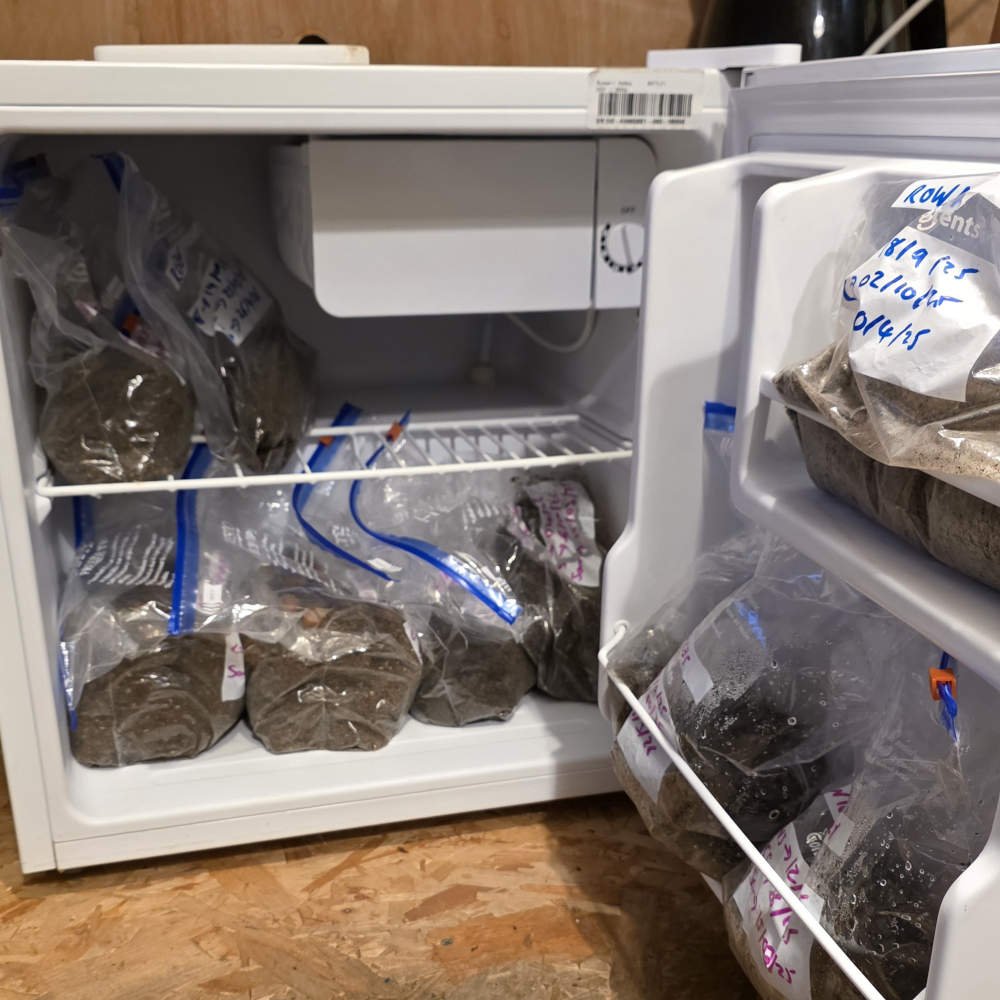
Our dedicated mini-tree-fridge!
Each tree species is different - Silver Birch requires only a month of cold temperature, others like Rowan and Cherry Plum need around five months, while some like Hawthorn are deeply dormant, requiring a whopping 78 weeks in the fridge! As such, we still have Hawthorn seeds in the fridge that we harvested in autumn last year.
Sowing the seeds for the future
The seeds are ready to sow in spring, typically in March and April, when they have reached the end of their stratification period. Most of the seeds will tell you they are ready to be sown as they will start germinating in the fridge, even at 4℃!
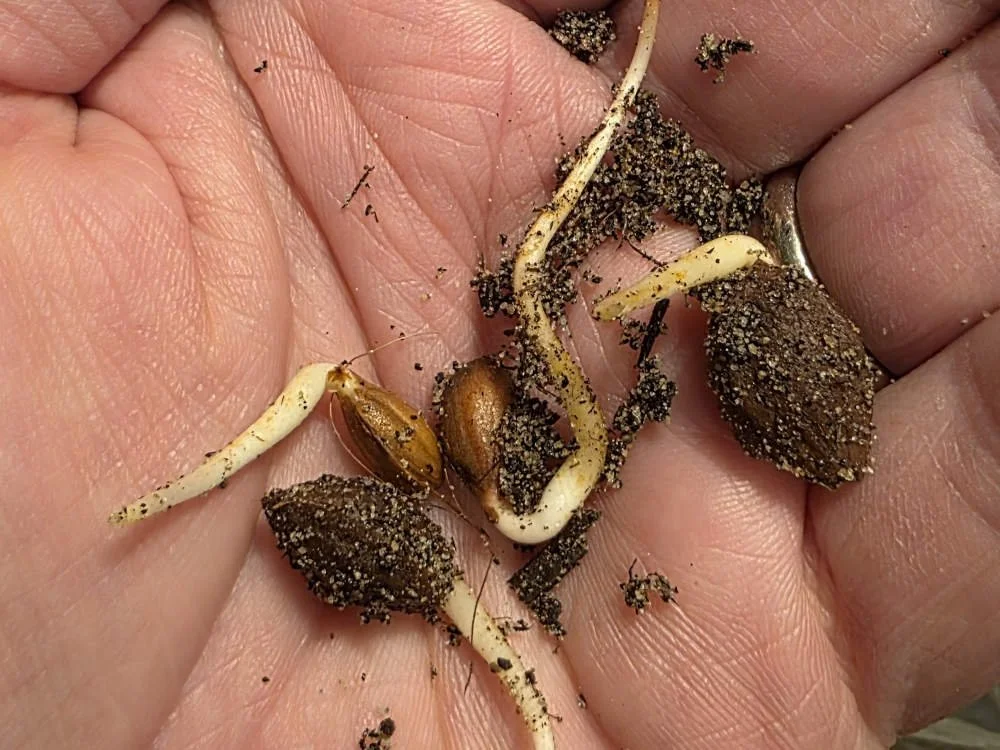
Cherry Plum seeds which germinated in the fridge during stratification
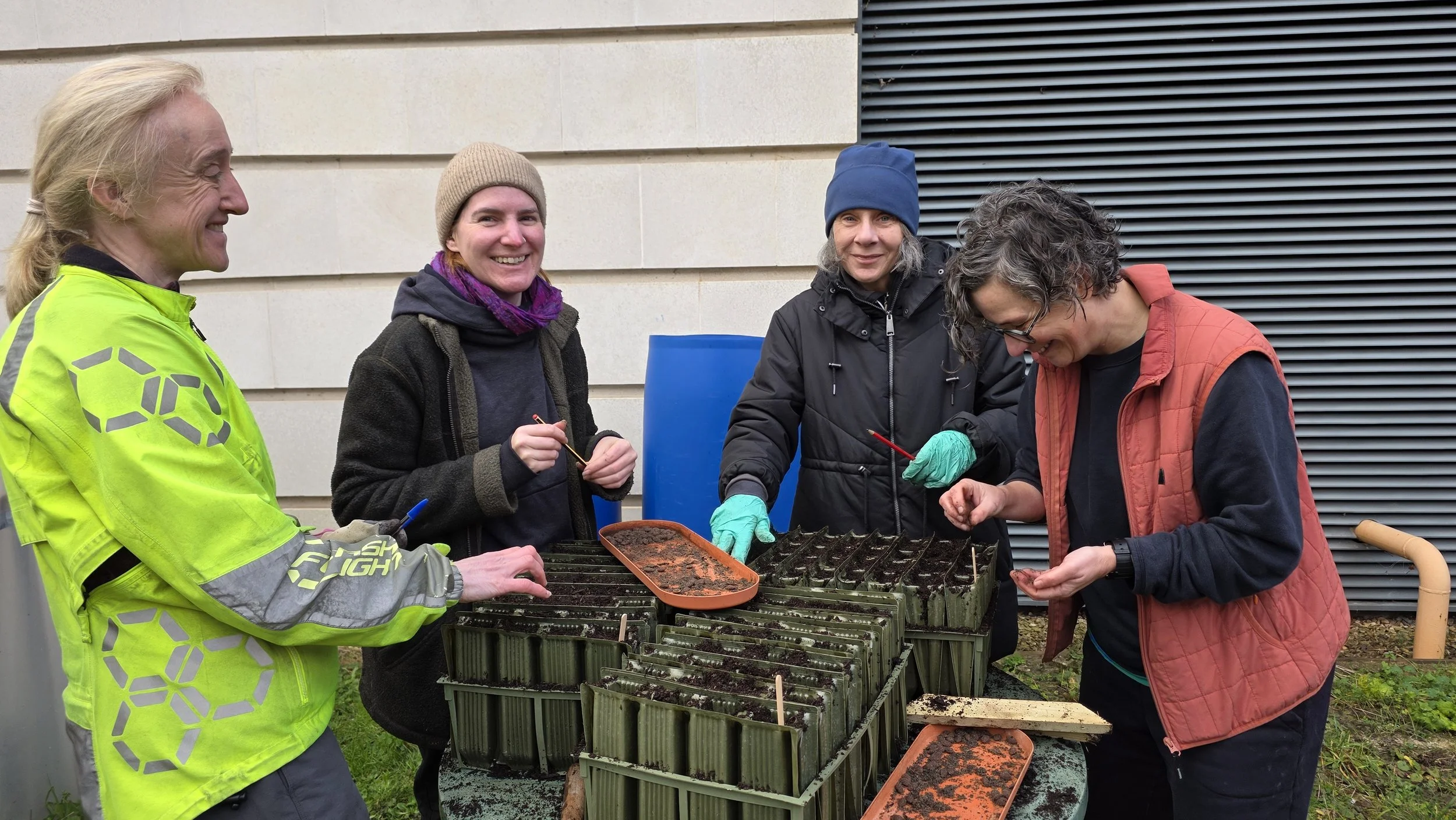
Tiny seeds like Rowan, Elder and Silver Birch are sown in seed trays. When large enough to handle the seedlings are then pricked out into individual rootrainer containers. Larger nuts and seeds are sown direct in rootrainers. Sowing the tree seeds and nuts is a wonderful group activity, full of promise and potential.
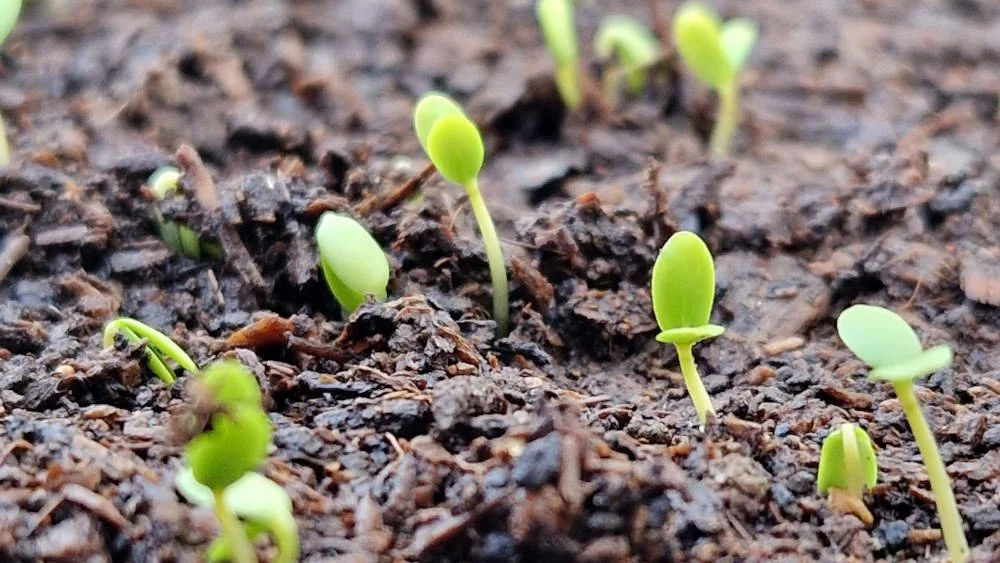
This is personally my favourite part of the process, as not very long after being sown we see hundred and hundreds of new trees emerge from the compost! It always inspires and fills us with wonder like we’re five years old again, a real highlight in the tree growing year. Knowing these hundreds of tiny seedlings will one day be mature trees is magical.
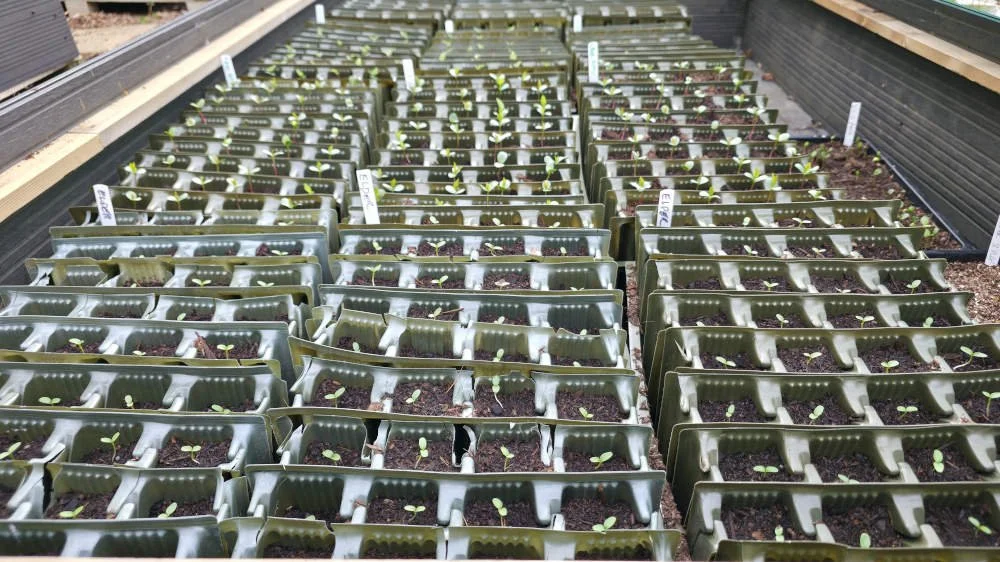
It can be a time consuming process when you’re growing 1,000 trees, but our volunteers rally round to sow, prick out and water the seedlings together.
Watering and growing
Once we have 1,000 newly emerged seedlings, the pressure is on! They must be watered regularly and any rogue weeds removed. We monitor growth and check for problems like mildew, isolating any affected batches.
Given the recent weather we’ve experienced in spring and summer with prolonged dry spells and intense heat, we install shade netting over the young trees to reduce their exposure to the sun. Without this they would literally bake in the heat and die off very quickly.
Thanks to a grant from the Tree Council we have 4,000lt of rainwater harvesting installed to water the trees and in prolonged hot weather they need watering at least every other day - this is a huge amount of work but an essential task for our volunteers, and it brings the side-benefit that we’re checking the trees very regularly to spot any pests or diseases quickly.
With this consistent care and a watchful eye, the seedlings gradually mature into healthy saplings throughout the year, and after a few months we have a mini-forest in full leaf! A very satisfying sight.
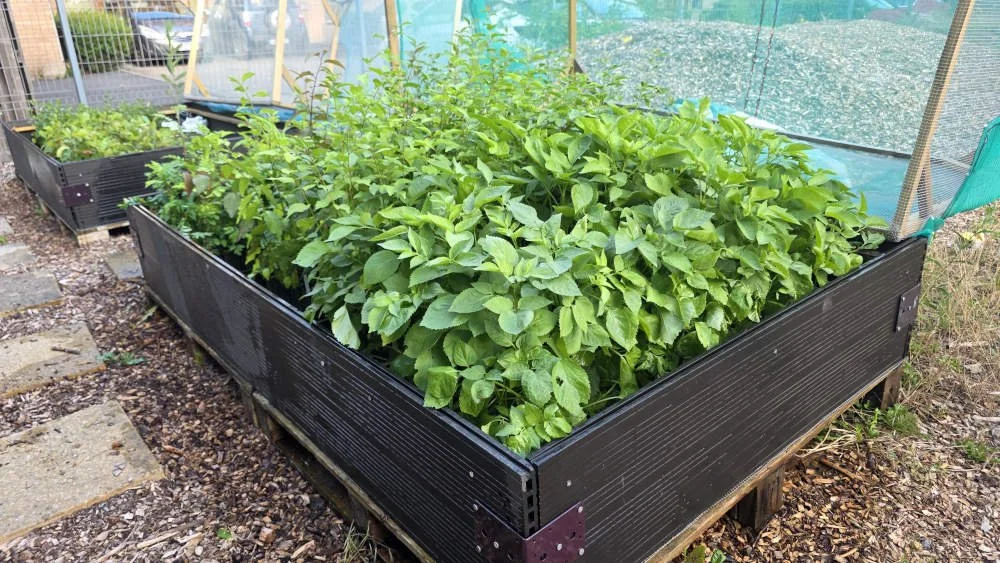
Bursting with trees!
From our nursery to your garden
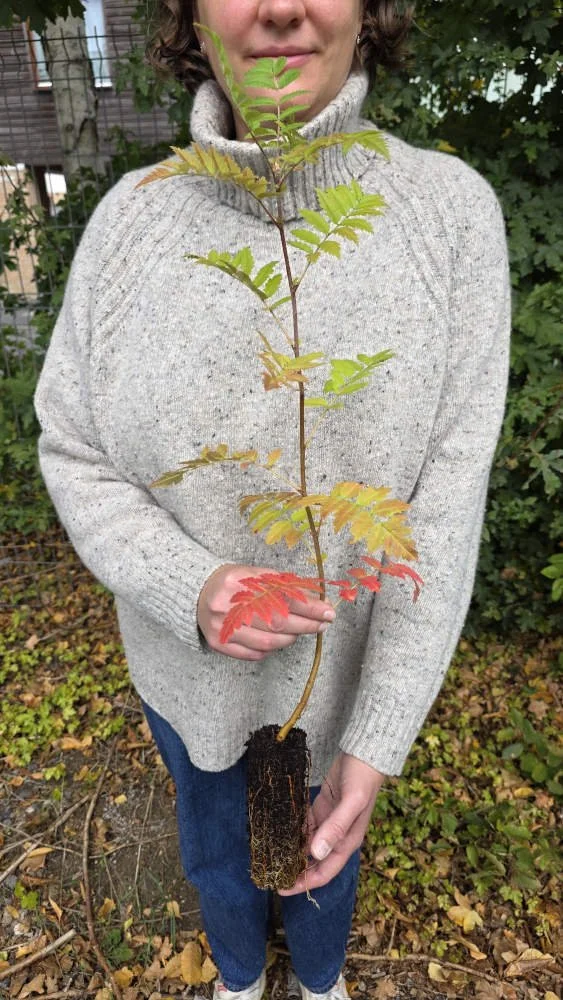
Most of our tree species are ready for residents between November and February. We stick to this period in late autumn and winter to sell them for a very good reason - it gives the young trees the best chance of survival when planted out. If they were planted out during a dry spring or hot summer, they risk dying due to lack of water as they would not have establish a good root system yet in the ground. In autumn and winter they can start to grow decent roots and be best prepared for the year ahead.
All the trees we supply come with a plug of compost and well established roots, again to give them a great head-start. We also include a free 60cm protection tube to protect them from strong wind and animals for the first couple of years they are planted out.
We sell the trees to ensure we cover our material costs and we operate a pay-what-you-can model with a minimum charge of just £1 per tree.
Most people voluntarily pay more for each tree however, and any extra we make directly funds our community projects. But if you can only afford £1, that’s fine too. We don’t want money to be a barrier to residents planting trees!
Anyone can order the trees, from residents and community groups to schools and landowners. There is no limit to how many you can order - if you want to establish a mini-forest or a native hedgerow, we’re here for you!
To order trees from us, simply visit this page to find all the information and a link to our online order form. We need to prepare them prior to collection and the trees will be ready to pick-up on set days from the Wiltshire and Swindon History Centre.
We are also hoping to have a market stall once a month in winter on the high street too, so if you see us there do come and say hi!
Be part of the journey!
Our Community Tree Nursery is people powered, all giving their time for free. It’s not without reward though - the satisfaction of seeing all the trees ready to plant out is incredible and we have a great time together doing it, real friendships and lasting connections are formed in the process!
If you’d like to help out we’d love to hear from you, please visit us at one of our garden monthly meet-ups on the first Saturday of each month, or contact us via our contact page. No previous experience is necessary, just oodles of enthusiasm!
Another great way to help us is to spread the word - please share a link to our website or our social media posts with any local friends, family and community groups, and encourage them to plant a tree too.
By growing trees together and sharing them across Chippenham, we're helping create greener neighbourhoods and a better future for local wildlife.
We’d love you to be part of our journey.
Find out more about our Community Tree Nursery.
