
For a few years now I have, in the Spring, walked through the patch of scrub grassland opposite Lords Mead Allotments. I did so because although overgrown and neglected it showed occasional botanical species that suggested that historically it had been a species rich meadow, probably cut for hay or used for pasture.
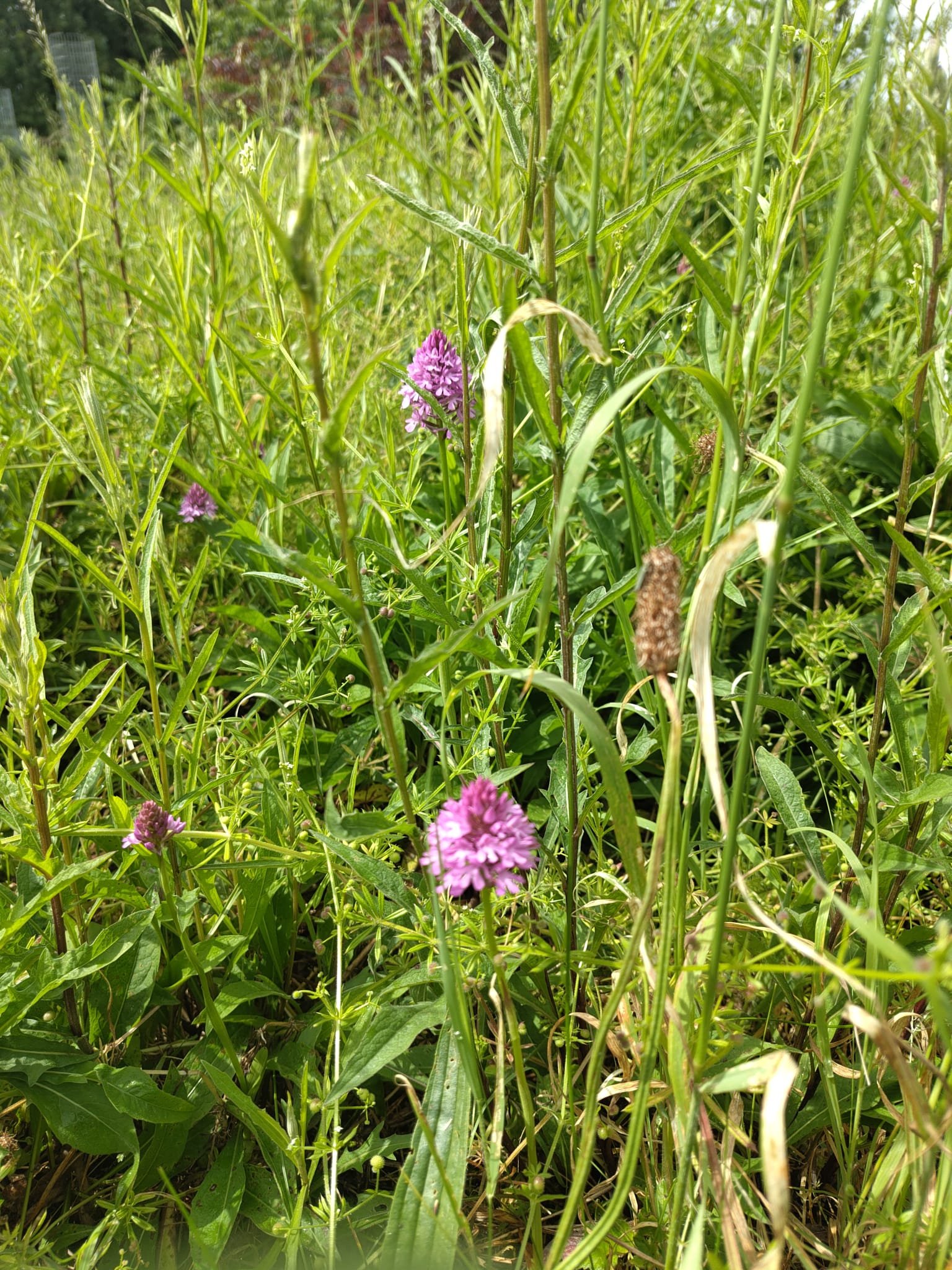
It did not appear to have been managed for a number of years and there was a concerning number of Nettles, Brambles, Hogweed and strong grasses which appeared to have crowded out most smaller flowering species. Just occasionally I could see one or two pyramidal orchids struggling to emerge through the thick sward of grass, and some taller beautiful blue meadow cranesbill that would rise above it.
In March this changed as the patch became Rooted Chippenham Lords Mead Community Orchard! The ground was disturbed by footfall, some clearance done and the planting of a good range of fruit trees.
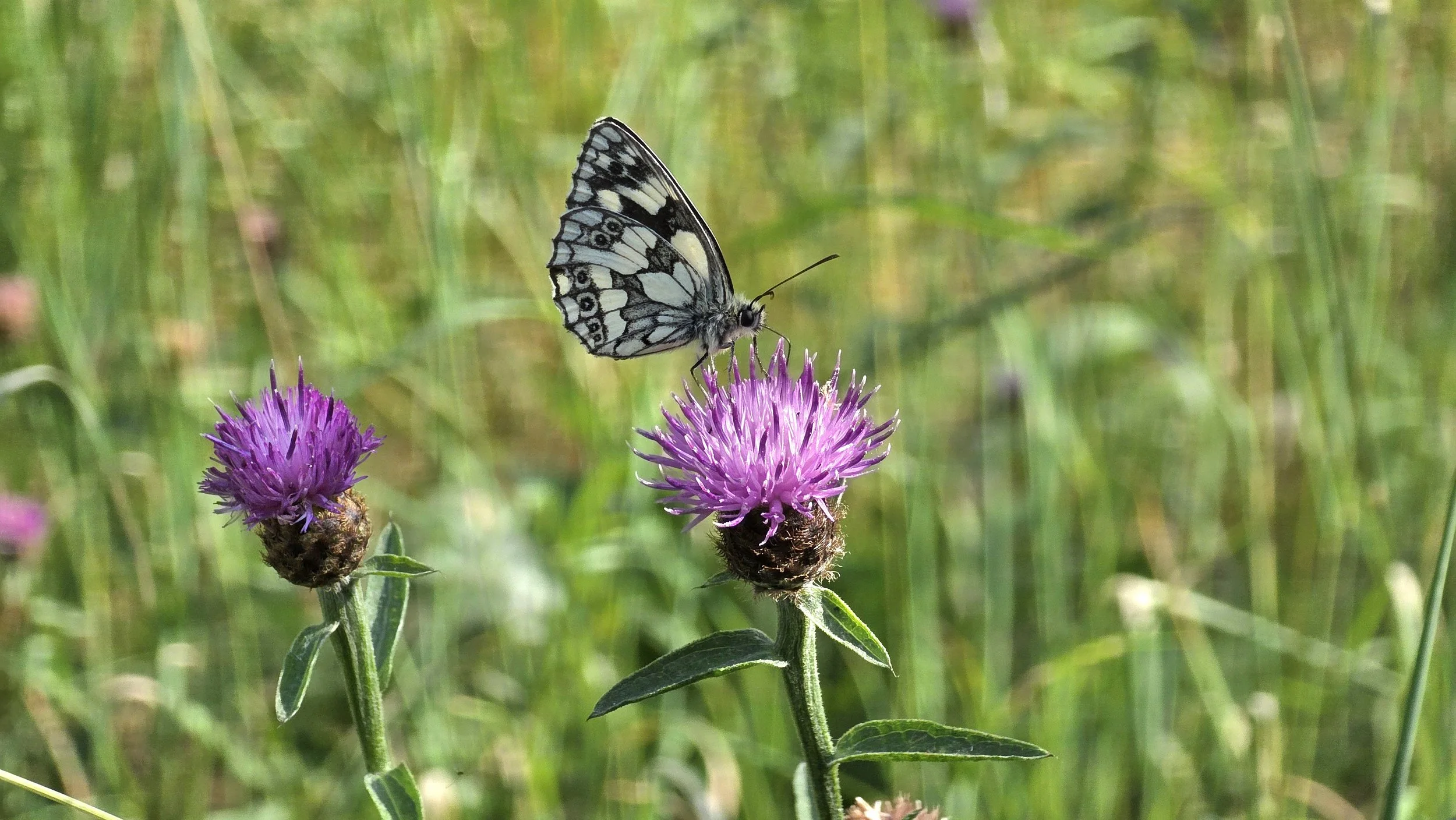
Later in Spring I again wandered down to see what was going on botanically and was pleased to see a really encouraging change! When surveyed, I found 27 positive indicator species for good quality neutral grassland. They including Slender knapweed, Agrimony, Ox eye daisies, Common vetch Ribwort plantain, Self heal, Red clover, Birds foot trefoil, Meadow buttercups, Yarrow, Wild carrot and more. Finally there were twenty or thirty beautiful Pyramidal orchids. The grassland was showing promise!
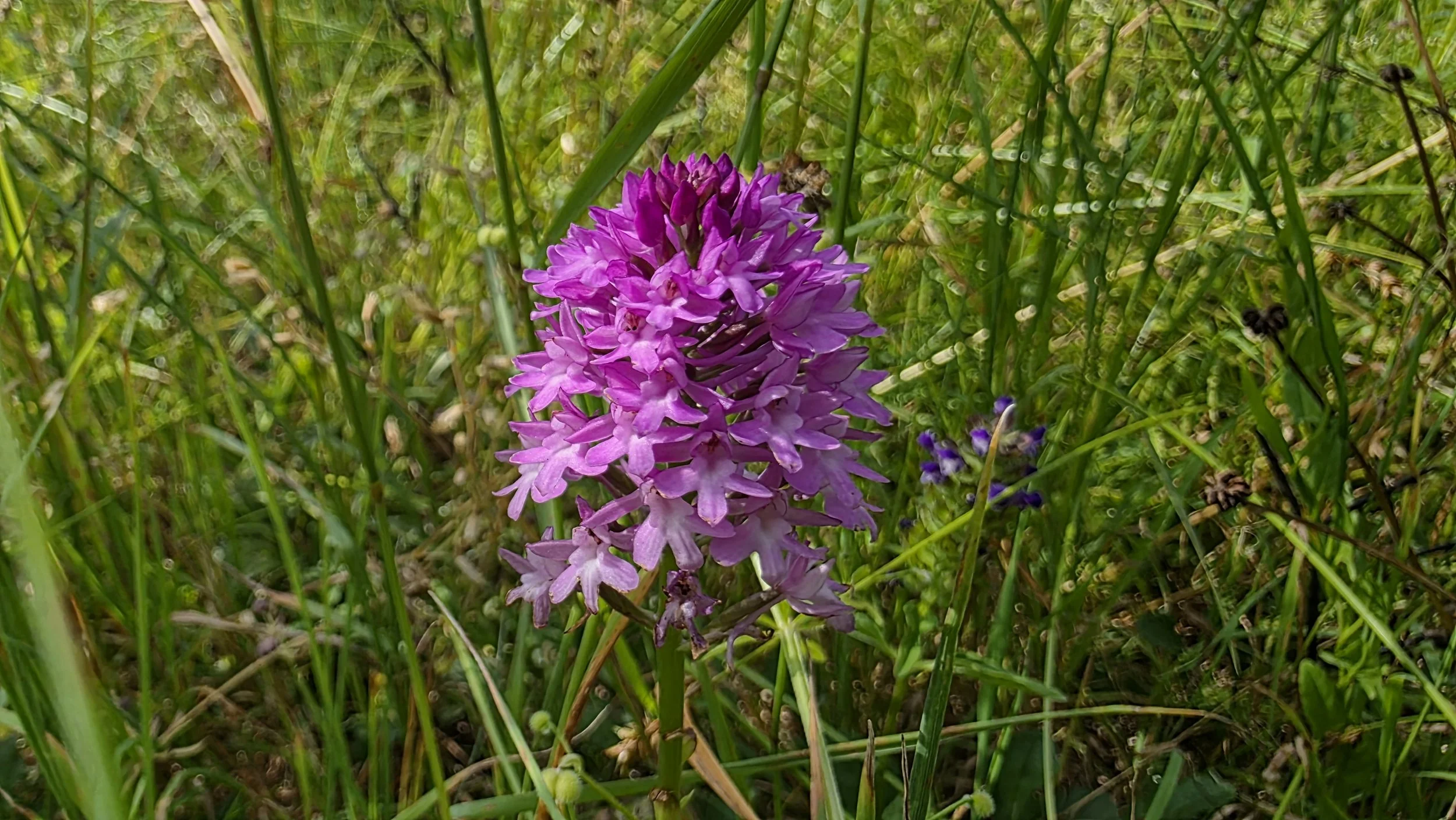
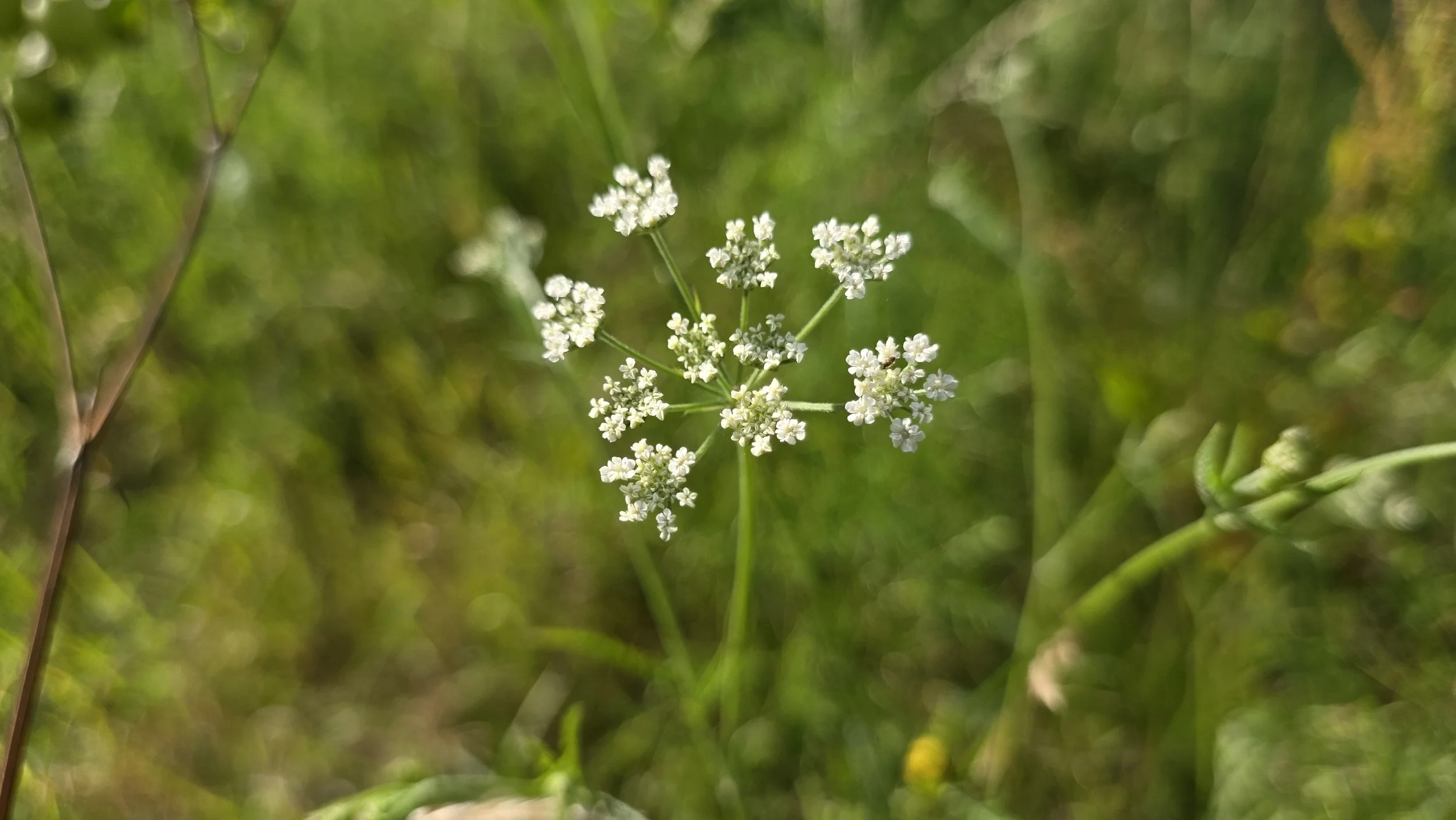
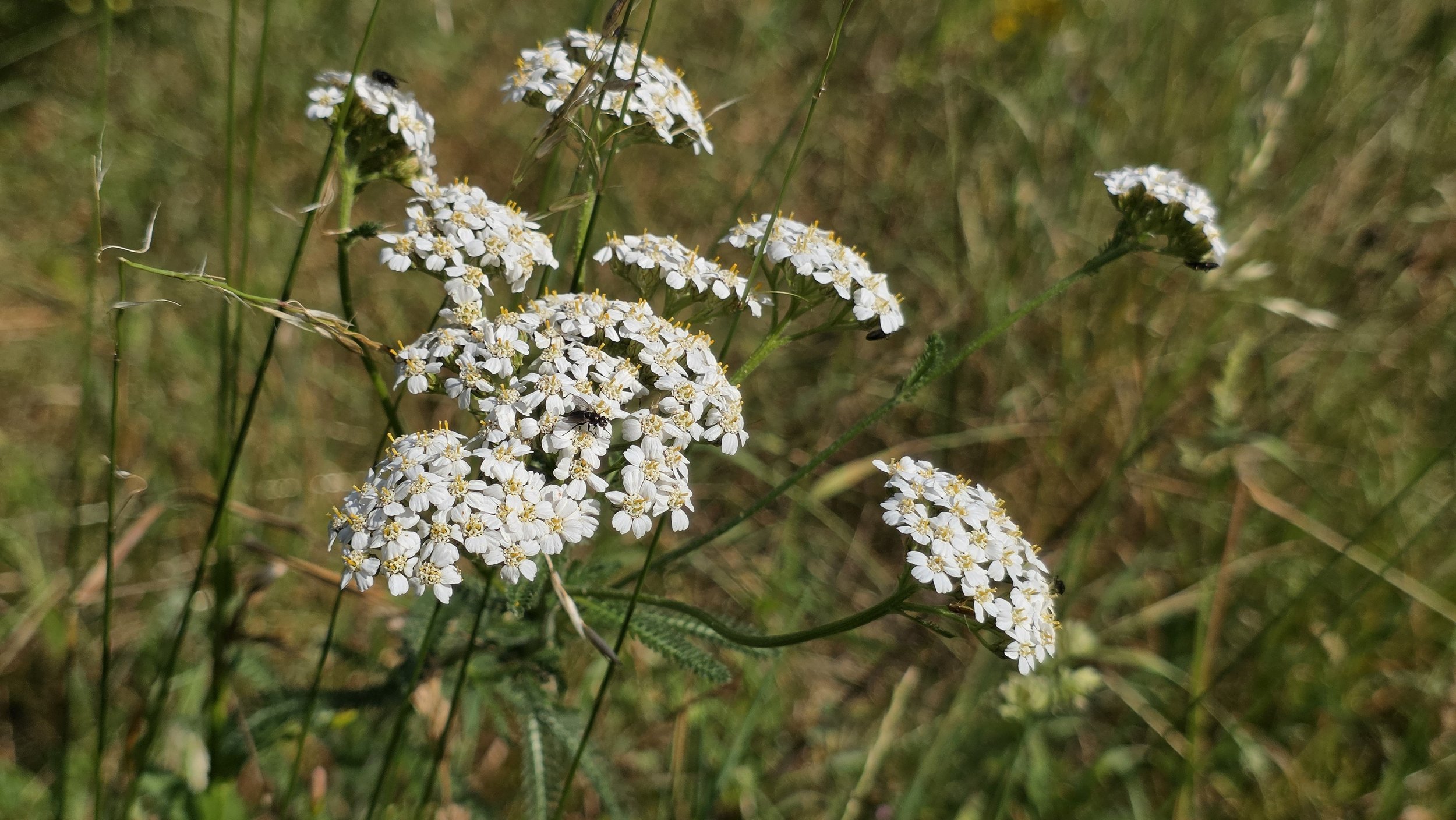
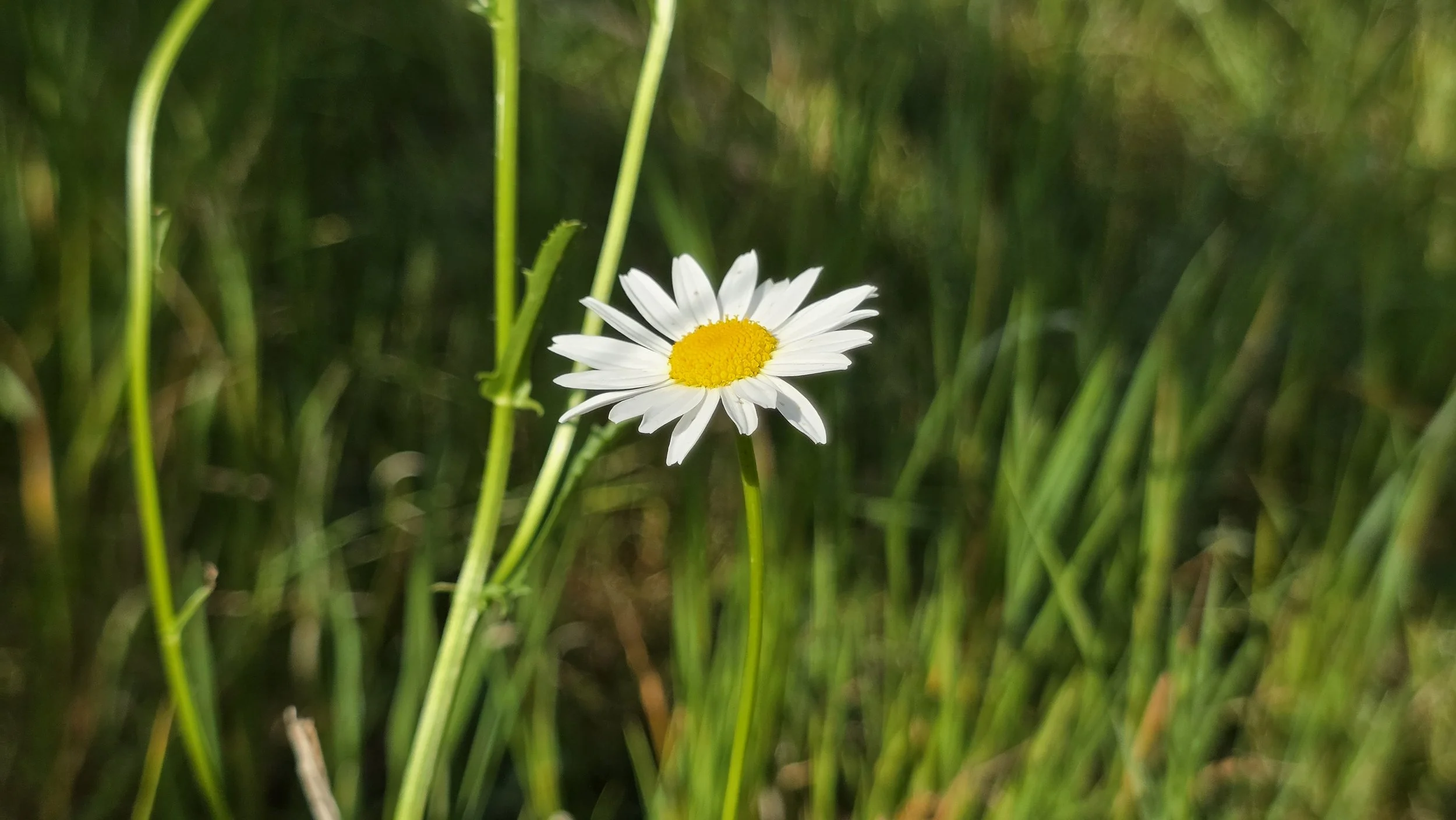
In order to suppress the stronger grasses, Nettles and Hogweed and encourage a wider range and density of native herbaceous species, I knew that the grassland would best be managed to mimic the old hay cut and grazing, with careful timing to ensure seeding of flowers before cutting. I discussed this with the Rooted Chippenham team who are managing the orchard to see what could be arranged.
Allowing good species to flourish
Last week the orchard and grassland beyond was cut and the arisings have been piled up in an effort to reduce thatching and nutrient levels. This is done to make the grassland less favourable for the thugs and allow the good grassland species to flourish. The heaps will also provide additional habitat for wildlife.
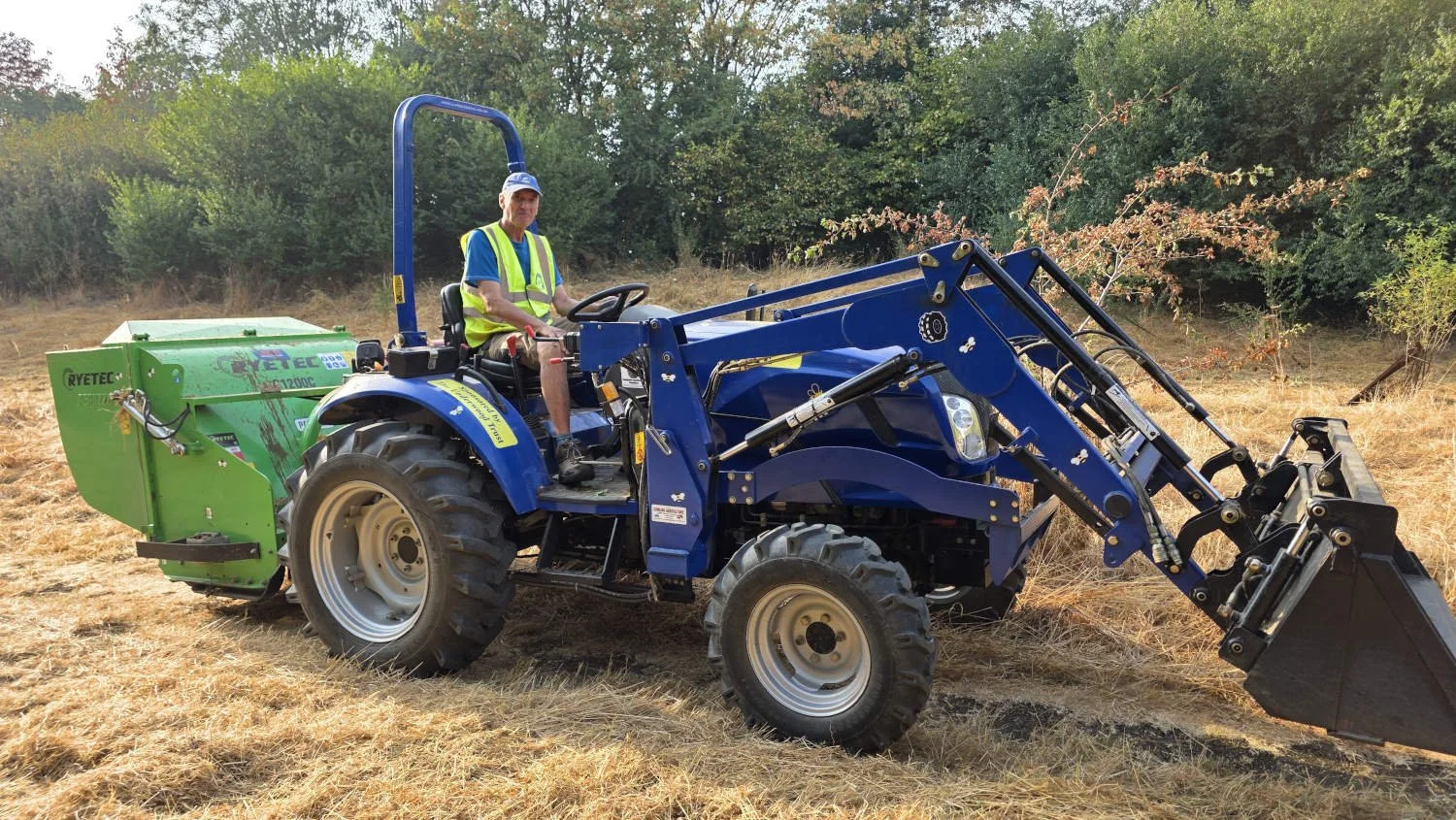
Very kindly, Howard Yardy from the Melksham, Chippenham and Calne branch of the Wilts & Berks Canal Trust came over with a volunteer. They brought in the small tractor and mower and a smaller mower for cutting the areas round the trees. The margins and some scrub linking to woodland have been left to provide shelter and overwintering spaces for insects, reptiles and small mammals and birds. Gradually a mosaic of plant habitats will develop to support a wide range of wildlife.
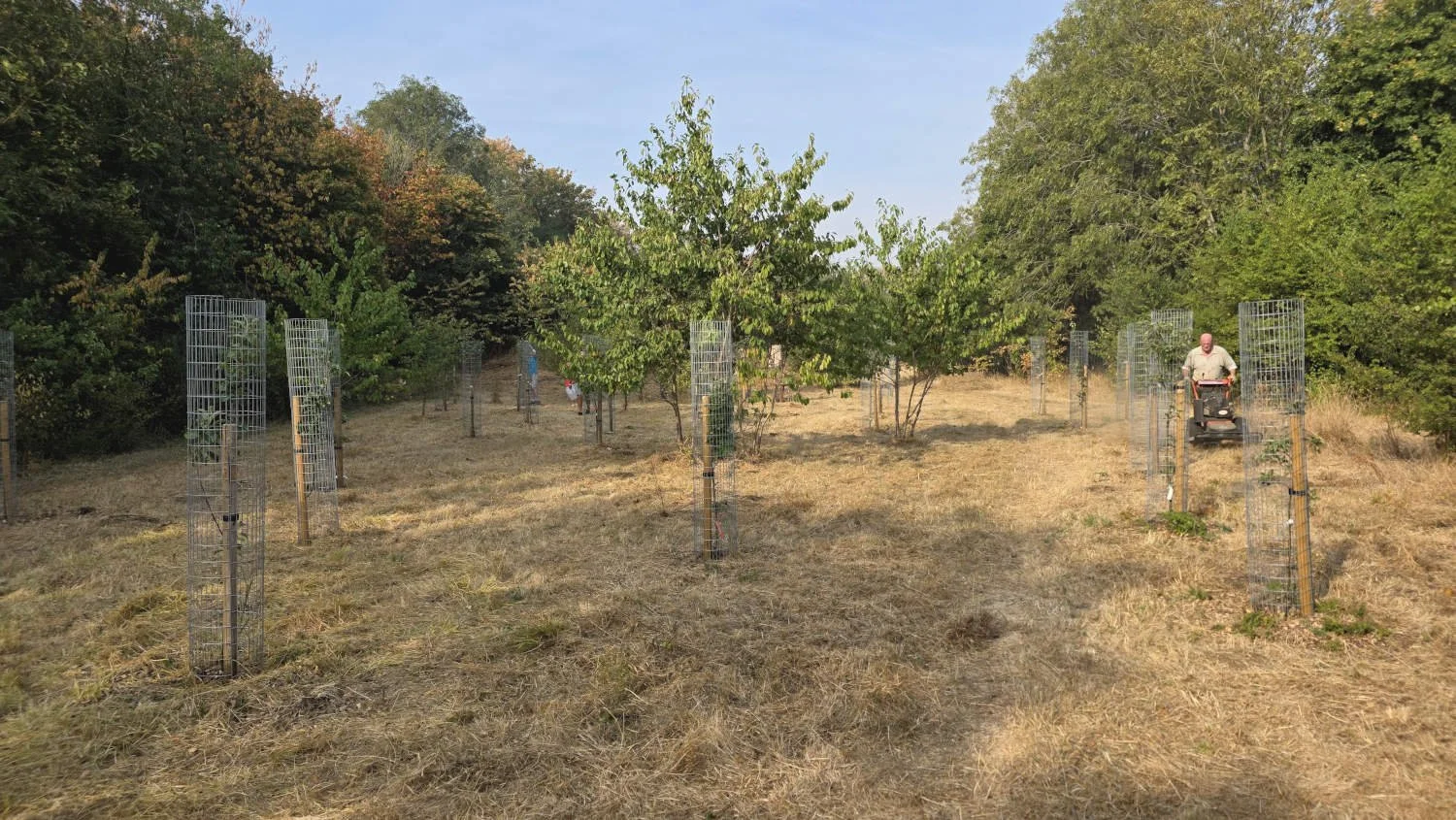
Since the war we have lost almost 97% of our neutral grasslands to intensive agricultural or, as in this case, to development. Every piece of grassland restored counts! So a big thank you to all who have been involved in rescuing this little patch and giving it a chance to flourish.
Finally, while at the moment the meadow looks very dry and sad, hopefully the resilient native grassland plants will be able to survive this very hot dry summer and the seed bank in the soil will again receive the light it needs to germinate, and with a cooler and damper rest of the year, next Spring will reward everyone’s efforts.
We’re looking forward with hope!
Julie Wheeler is a local naturalist with the group Nature Matters who kindly advises Rooted Chippenham on the management of grassland in our community orchard.