
Things are hotting up in our composting corner….
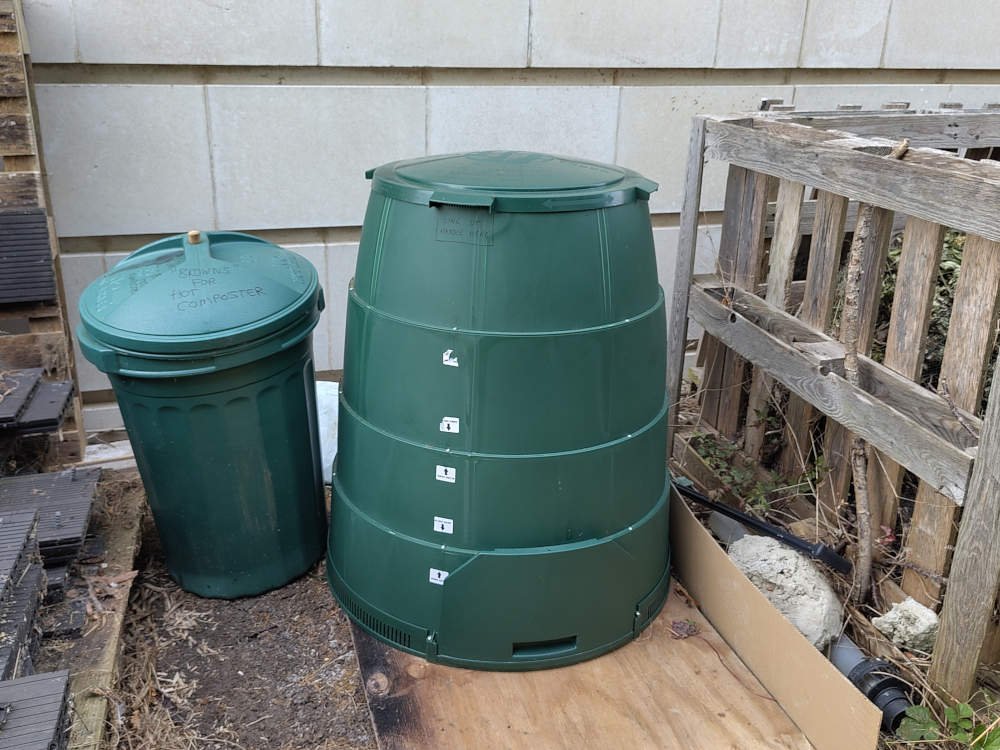
Last week we started down an exciting new path in our composting journey when we set up our new Green Johanna hot composter, alongside our existing cold composting bays.
While a full price Green Johanna can cost £125 or more, we were able to take advantage of Wiltshire Council’s subsidised purchase scheme to buy ours for just £73 - although we did also splash out on the insulated jacket to go with it so we can keep our Johanna nice and warm when woolly-hats-and-coats-season rolls round!
Why hot composting?
It’s true that the hot composter will require a bit more maintenance than the cold compost heaps, but there are plenty of good reasons why it is worth the extra effort to help us in our mission to grow organic fruit and veg, whilst reducing waste and promoting healthy soil and biodiversity.
If you put a pile of recently dead material together it will eventually rot down and turn into compost thanks to the miracle of nature’s decomposers, including fungi, microbes, worms and a host of soil micro-organisms. However hot composters offer a way to speed up the process considerably – whilst the cold composting heap may take 1-2 years to produce compost, a Green Johanna can reduce that time to just 30-90 days!
It is worth noting that even hot-composting compost requires a maturation period at the end when the heap cools down, acidity levels stabilise and worms & fungi get a chance to get involved and enrich the mix. For this reason it is often a good idea to have a pair of hot composters cycling in and out of use. We’re planning to purchase a twin Green Johanna to join the first if the hot composting goes well over the coming months.
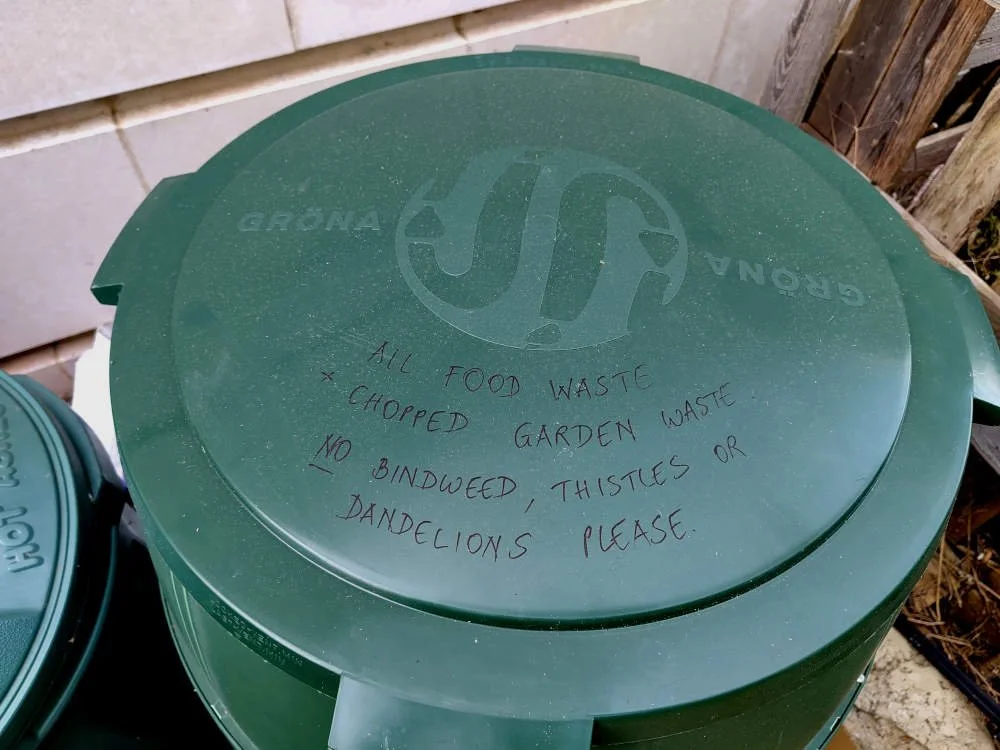
Other benefits of hot composting include better elimination of pathogens and more effective killing of weed seeds due to the higher temperatures. Yet another advantage is the much wider range of materials that can be put into a hot composting system. In addition to the garden waste and raw fruit and vegetable peelings that can go in your cold composting heap, a hot composter like the Green Johanna can take all sorts of cooked and uncooked food waste including grains, baked goods, dairy and even meat and fish.
This ability should prove particularly useful coming at a time when the Rooted Community Fridge project is very close to launch, as any leftover foodstuffs can be fed into the hot composter and end up helping us grow more food in the future – a great example of circular sustainability in action!
How it works
You could be forgiven for finding the world of hot composting a bit intimidating at first with the mysterious lists of carbon to nitrogen ratios and reference to mesophilic and thermophilic phases and so on. Thankfully there are a lot of down-to-earth hot composting instructions out there and we have even produced our own Rooted Chippenham hot composting guide PDF which includes a troubleshooting section and is free to download.
The key to successful hot composting lies in making sure that conditions are right for the oxygen-and-heat-loving thermophilic bacteria to do their stuff in the middle phase of the hot composting process.
This is the period where the most rapid decomposition is taking place and temperatures should be in the range of 40° - 70°C. To make that happen you need to put in enough of the right mix of materials, conditions need to be moist but not wet (think damp sponge rather than swamp!) and there needs to be enough ventilation/air pockets.
Another often overlooked aspect is making sure that you chop the materials being added into small enough pieces (around 3cm) to maximise surface area as the bacteria can only get to work on the surface.
If you feel inspired, do check out Wiltshire Council’s subsidised purchase scheme.
Get in touch!
If you’d like to know more about composting and get involved in our own composting efforts – or volunteer to help out with the upcoming Community Fridge scheme - do get in touch using the form on our contact page. We’d love to hear from you and all being well we’ll be posting pictures of our lovely home-made compost for you to admire before the end of the year!